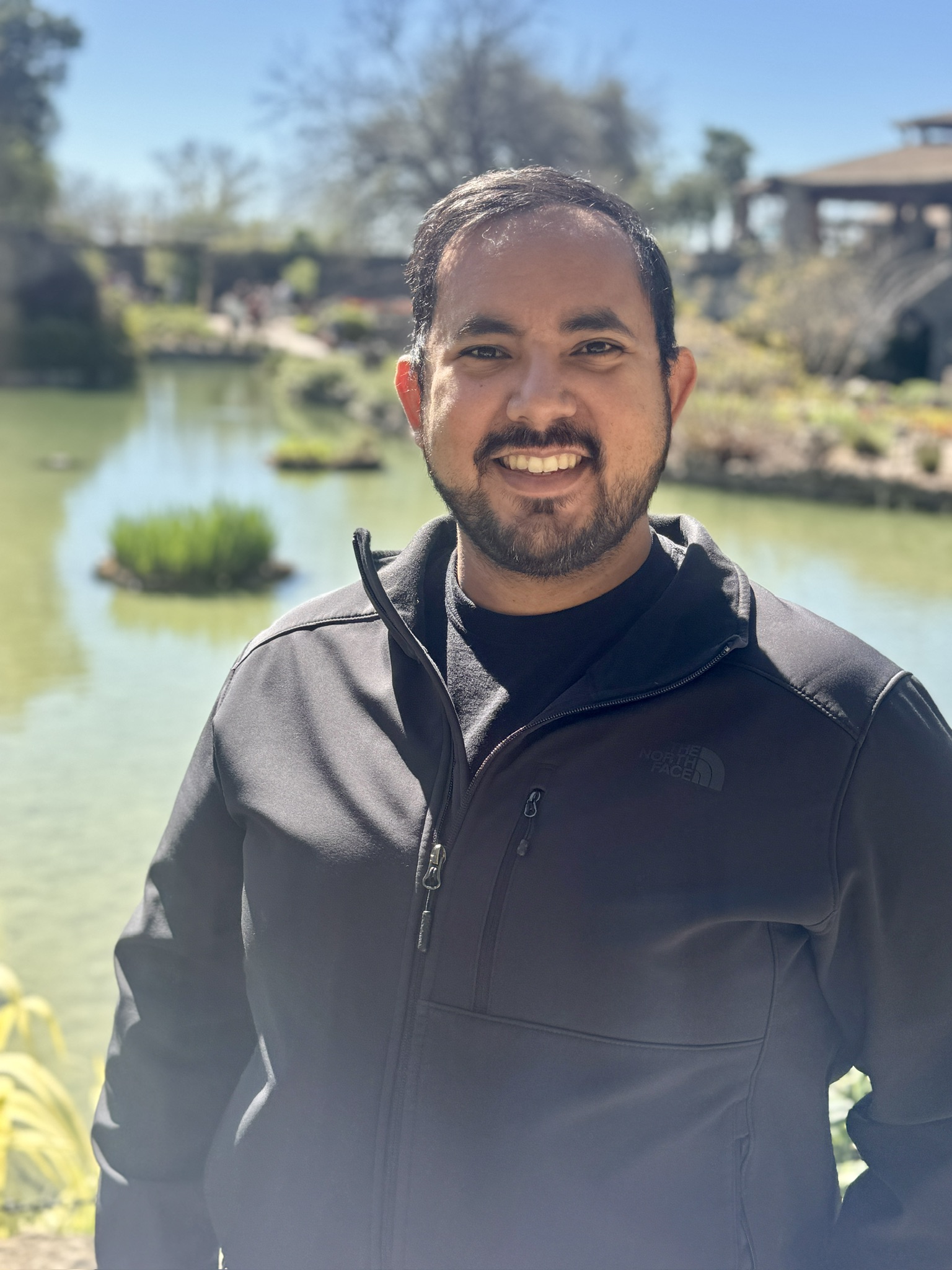
A Q&A with Ryan Hunt a local RN & Nursing Manager
By Farrah Hunt, MS, LPC, NCC and Kayla Burrow, MS, LPC
A note from Farrah: Ryan is my husband, and I asked him to be featured in this Community Spotlight because the way he talks about his patients, his team, and the responsibility of this work reflects everything we believe at WCCW: that care is relational, and that healing begins with being truly seen.
Some conversations stay with you long after the questions have been answered. Our conversation with Ryan was one of them. It was direct, honest, and quietly profound. It was the kind of conversation that reminds you how much weight people carry in silence, and how rarely anyone pauses to ask the person doing the carrying if they are okay.
We spent time with Ryan learning more about his 14-year journey through some of nursing’s most demanding environments: medical ICU, trauma ICU and the emergency room, and what that journey has taught him about resilience, grief, leadership, and the role human connection plays in healing.
A Calling Shaped by Proximity
Ryan grew up watching his mother, who was a nurse for 40 years. Healthcare was never an abstract aspiration, it was something lived, modeled, and absorbed. Although he always felt drawn to the fast pace of the emergency room, his career began in the ICU.
Looking back, he sees that as exactly the right path.
The ICU offered something the pace of the ER could not: proximity. Time with patients over the course of long hospital stays. The slow and often uncertain progression of critical illness. The privilege of walking alongside families navigating fear, hope, and heartbreak.
Looking back, what Ryan was building in those early years, without naming it that way, was attunement. The capacity to remain present with someone who is suffering without rushing to fix or resolve what they are experiencing. That capacity does not develop overnight. It is shaped through repeated encounters with uncertainty, loss, and vulnerability. The kind of experiences that either hardens a person or deepens them.
Ryan was deepened by them. Though not without each leaving its mark.
Emotional and Mental Wellbeing: The Heart of Self-Care
Ryan has been in rooms that most people will never enter. He has cared for people on their hardest days.He has stood beside families waiting for answers they never wanted to hear. He has participated in countless codes and learned, over time, the importance of allowing people to spend their final moments surrounded by those they love.
“Younger me was harder on myself,” he shared, “my self-worth was tied to what I thought I knew.” Like many healthcare professionals, his sense of worth became intertwined with outcomes. In high-performing clinical environments, competence often becomes currency. The problem is that outcomes are not always within your control. In critical care, they often are not.
Over time, that reality leaves its mark.
Ryan recalled a 14-hour shift that still stays with him today. It was his first code. Every protocol was followed. Every intervention was performed correctly.
The patient still died.
“That is when I learned the weight of death,” he said. The lesson was not simply about loss. It was about confronting a difficult truth: doing everything right is not a guarantee of anything.
Then came COVID-19.
What had been a manageable accumulation became, for many healthcare workers, an unrelenting flood. Colleagues. Physicians. Family members. Friends. Patients. The losses came without pause, and with them a particular kind of helplessness that the profession had not been prepared for.
“Hopeless. Helpless,” Ryan said simply.
When asked whether he feels he has fully recovered from that season, his answer was honest.
“I don't know if I have.”
It is a question many healthcare professionals continue to carry years later: How do you come back from that? And how many people truly do?
For Ryan, these answers have not been found in a single breakthrough moment. Instead, they have come through a gradual shift in priorities. The time he spends with his wife and children is no longer something that happens around work, it is something he actively protects. After years of caring for others through some of life's most difficult moments, Ryan has come to understand that his own well-being deserves attention too.
What the System Demands — and Refuses to Return
There is an unspoken contract embedded in nursing that most nurses never agreed to sign. The expectation is absorption. Of patient fear. Of family grief. Of institutional pressure. Of the moral distress that accumulates shift by shift, year by year. Hospitals expect it. Regulatory systems measure around it. Much of this emotional labor goes unseen and all of that weight flows downhill and lands on the nurse, not distributed, not shared, not acknowledged as a clinical load in its own right. Just expected.
Ryan has watched this hollow people out. He has seen talented, compassionate colleagues leave the profession not because they lost their calling, but because the system they worked within had no real infrastructure for giving anything back. "I have worked in some hospitals that have community systems that function better, than others" he said. "We need something geared toward nurses. Real support, not just a phone number.”
Compassion fatigue and burnout are not signs of weakness. They are predictable outcomes of sustained emotional labor without adequate support, recovery time, or institutional accountability. Naming that distinction matters, both for the nurses experiencing it and for the systems that continue to benefit from their silence about it.
Human Connection as Clinical Practice
What Ryan has come to understand about care, is that human connection is not supplemental to good nursing. It is the foundation of it.
"People just want to be treated as human," he said. That statement sounds simple. In practice, inside a system optimized for movement and metrics, it is anything but. Keeping someone human means slowing down enough to establish contact. To acknowledge fear before addressing a symptom. To let a person feel seen before moving on to the next task.
From a clinical standpoint, this is co-regulation, one grounded nervous system helping another find steadiness. Before education, before intervention, before discharge instructions, people need to feel safe. Ryan has learned to offer that, not because it was modeled for him early on, but because the work eventually made it undeniable.
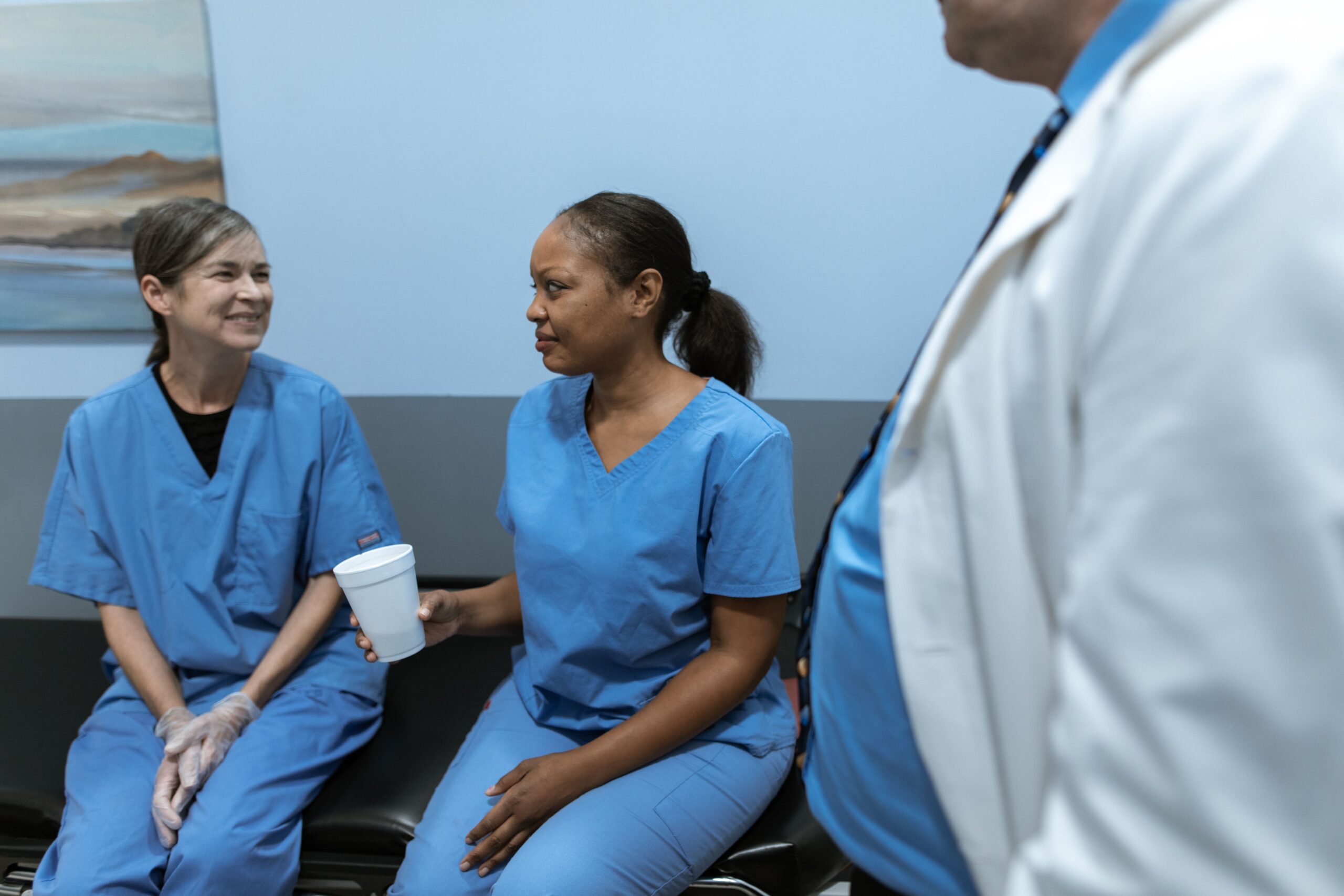
In his current role as an ER manager, Ryan sees fewer patients directly than at any point in his career, yet his focus on human connection has remained unchanged, instead, it has shifted towards the team he leads. What are they carrying? Do they have what they need? Do they feel supported enough to continue showing up for others? "My role now is to support my staff," he said. "Get them the resources they need. Make sure they're okay and feel supported." The instinct is the same. The scale has simply changed.
What the Patients Left Behind
When we asked what lessons his patients have taught him, Ryan's answer was immediate: humility. Not the performative kind, but the kind earned through experiences that make certainty feel naive.
A child whose family waits in a hallway. A patient whose final moments he chose to witness rather than interrupt. A mother receiving the phone call no parent should ever receive.
These are not experiences that leave you unchanged.
The version of Ryan who shows up to manage an ER today understands that the most important thing he can offer the people around him, patients and staff alike, is permission to remain human inside a system that does not always make that easy.
A Gentle Closing
Talking with Ryan reminded us that mental health support does not always look like therapy. Sometimes it looks like a nurse who slows down long enough to make contact. A manager who asks his team how they are really doing. A person who learned, the hard way, over many years, that connection is not a soft skill.
It is the calling.
You may know someone who deserves a moment in the spotlight. This could be a person who has navigated mental health challenges with resilience, introduced a meaningful idea or practice related to mental wellness, or simply shows up for others through consistent, quiet acts of care.
If someone comes to mind, we’d love to hear about them.
Reach out to us at Wccandwellness@wccounselors.com and share why you’re nominating them. We value meeting new community members and highlighting the many ways people make mental health matter—often in everyday, unseen ways.
If you’re feeling ready for support, or know someone who is, you’re also invited to:
• Schedule a consultation to explore trauma-informed, relational counseling
• Share this perspective with someone who may need a gentle starting point
• Explore our Resources Page for additional tools, education, and support
• Leave a Google review to help others find compassionate, ethical care.
A Google review is a meaningful way to support our practice and help others find care that feels steady, respectful, and human. Public feedback is not part of therapy and is never expected. If you choose to share feedback publicly, please protect your privacy and avoid personal or clinical details.